A Turkish dinner is not assembled arbitrarily. The sequence of a properly structured Turkish meal — the procession from cold mezze through warm dishes to a protein main and then something sweet — reflects centuries of refined table culture, and a good dinner cruise replicates that logic on the water. Cold mezze arrive first because they serve a deliberate purpose: they occupy, satisfy a little, and open the appetite rather than closing it.
Haydari (yoghurt with herbs and garlic), ezme (spiced tomato and pepper paste), white bean piyaz, and stuffed vine leaves are not starters in the Western sense — they are a continuous presence that frames everything that follows. We keep them on the table. Warm mezze — borek, fried calamari, midye tava (pan-fried mussels) — mark the transition from arrival grazing to deliberate eating.
The timing aligns, on a GoldenSunsetTour cruise, with the boat clearing the Galata Bridge and beginning the open-strait passage. There is something appropriate about the meal accelerating as the view expands. The main course is almost always a fresh fish or grilled meat option, and the choice matters. Istanbul s fish calendar is real and followed by serious kitchens: lakerda (salt-cured bonito) in autumn, sea bass and sea bream year-round, sardines in summer.
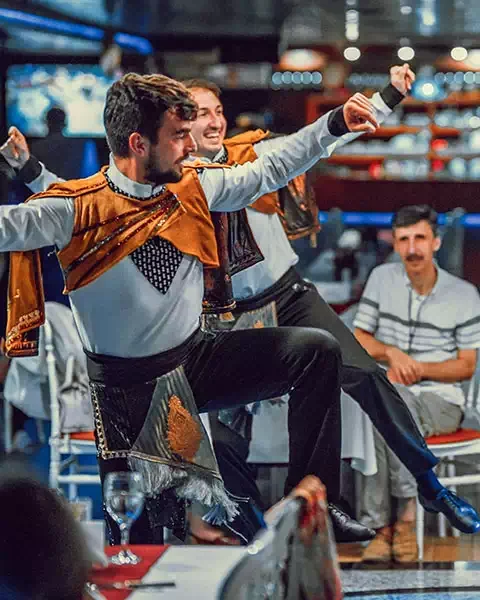
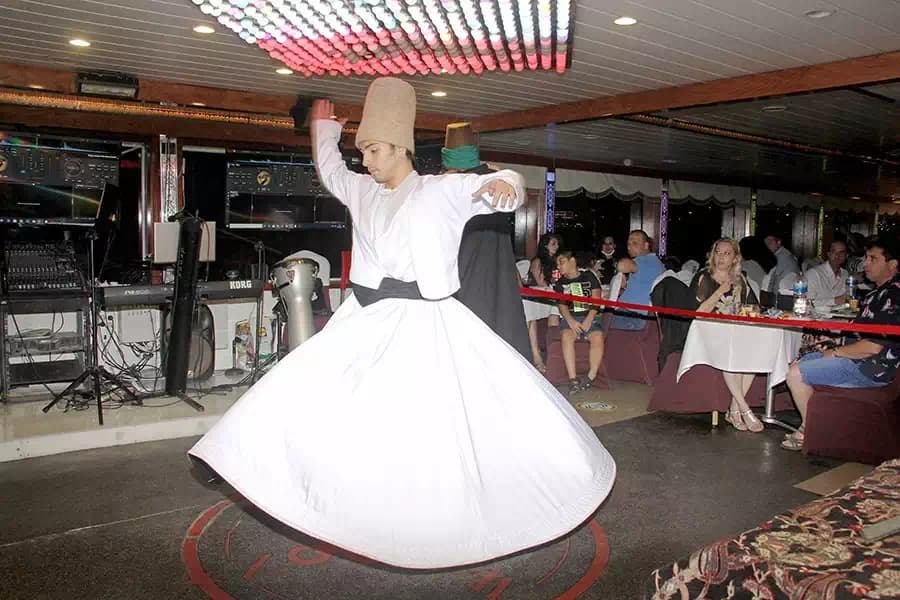
A dinner cruise that serves the same fish in January and July regardless of market availability is buying frozen product. Ask — the answer reveals the quality of the kitchen. Dessert is Turkish delight in the original sense: baklava, kunefe, or sutlac (rice pudding) with the weight of a proper meal behind them. The Turkish coffee that follows is not decorative — caffeine and cardamom are how you transition from the table to the dance floor.


 backdrop](/_next/image?url=%2Fimages%2Ffleet%2Fy10%2F02.jpeg&w=1920&q=75&dpl=dpl_9fGWWnwhj3LuGZ3N4FDpjTzWsSZ6)